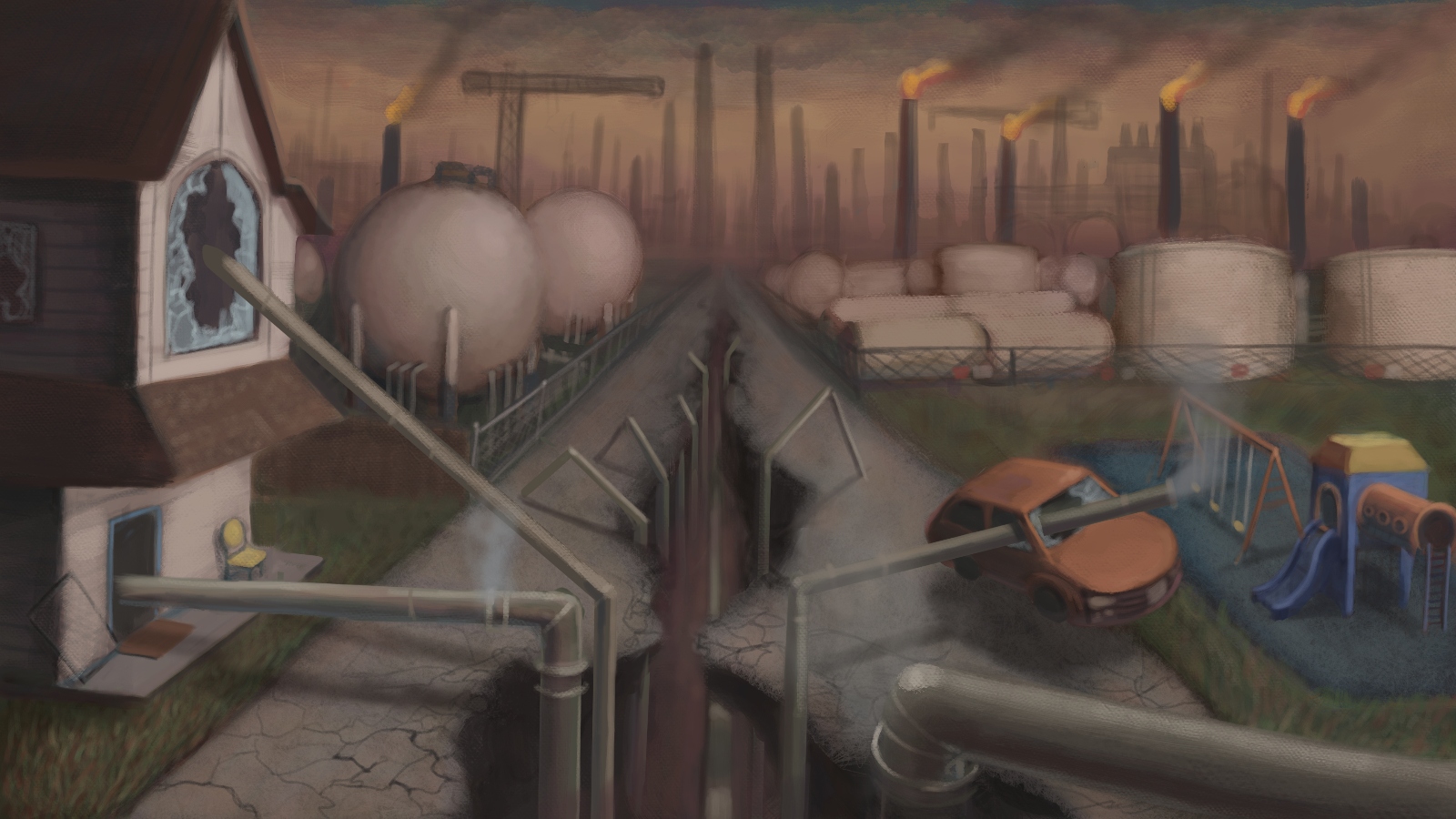
Let’s establish some baselines. Texas is responsible for more greenhouse gas emissions than Saudi Arabia or the global maritime industry. Its oil, gas, and petrochemical operations discharge tens of millions of pounds of toxic pollutants into the air each year, comprising almost one-fifth of such releases in the United States. It is the nation’s top emitter of the carcinogens benzene, ethylene oxide, and 1,3-butadiene. It accounts for 75 percent of the petrochemicals made in the U.S. It is an engine of the world’s plastics industry, whose products clog oceans and landfills and, upon breaking down, infuse human bodies with potentially dangerous microplastics. Despite all of this, the state’s commitment to fossil fuel infrastructure is unwavering, driven by economics. Oil and gas extraction, transportation, and processing contributed $249 billion to the state’s gross domestic product and supported 661,000 jobs in 2021, according to the most recent reports from the Texas Economic Development & Tourism Office. An industrial construction spurt is well into its second decade, with little sign of slowing. Since 2013, 57 petrochemical facilities have been built or expanded in the state, according to the nonprofit Environmental Integrity Project’s Oil & Gas Watch, which tracks these activities. Over half are in majority-minority neighborhoods, the group’s data show. Over the next five years, 18 new plants and 23 expansions are planned or are already under construction. Twelve of these projects collectively will be allowed to release the same amount of greenhouse gases as 41 natural gas-fired power plants, according to the…
Want more insights? Join Grow With Caliber - our career elevating newsletter and get our take on the future of work delivered weekly.
