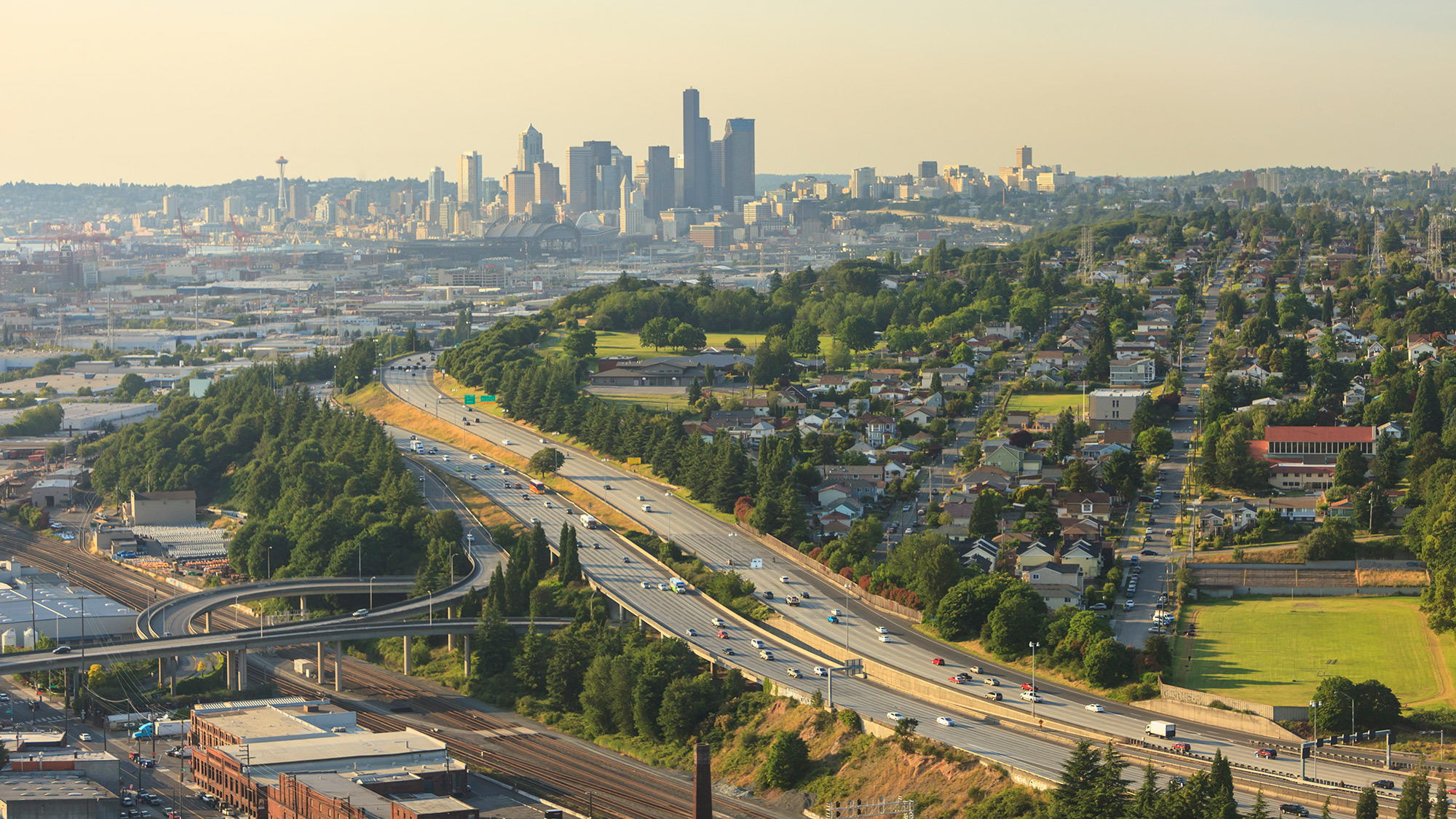
Lea esta nota en español. For Maria Perez, joining a project to reduce food waste in Washington wasn’t just a job. Her journey with the Duwamish Valley Sustainability Association (DVSA) began when she was 14 and enrolled in a youth program that sparked her interest in fighting climate change. Six years later, the association hired her to manage a program that turns waste from a Seattle neighborhood into a type of liquid plant food. The innovative program in the South Park area was launched by the DVSA in 2021, in partnership with nonprofits including Food Lifeline, Sustainable Seattle, and Black Star Farmers, as well as the company Chomp — which builds the initiative’s small-scale biodigesters. Perez spent hours learning about how the sealed container uses bacteria to reduce emissions while growing food for the predominantly Latino neighborhood. She spoke with residents, teaching young people who stood where she once had. Her enthusiasm for the project was impossible to miss — she talked about it constantly, sharing details with everyone in her life. “It was just really exciting [to see] how everything came into a circular economy,” Perez said. Slightly smaller than a shipping container, the sealed bins function much like a cow’s four-chambered stomach — introducing microbes that every year can turn 25 tons of rotting food into 5,400 gallons of fertilizer. It also creates biogas, a renewable energy source that can be used for electricity or fuel. “We started to develop a new project [focused on] organic waste, because…
Want more insights? Join Grow With Caliber - our career elevating newsletter and get our take on the future of work delivered weekly.
