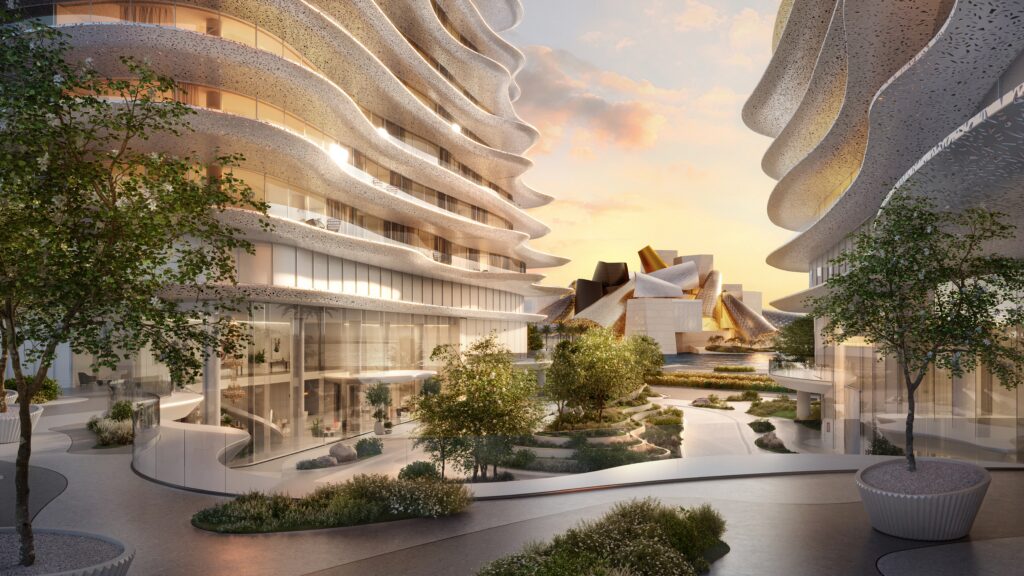
Architects: Want to have your project featured? Showcase your work by uploading projects to Architizer and sign up for our inspirational newsletters. Have we passed peak globalization? In architecture, several decades ago, big-name architects were routinely invited to import their aesthetic brand to regions around the world. Nowadays, however, the best designers are responding directly to local conditions, drawing together the programmatic brief and the cultural context with site-specific conditions, allowing all of these factors to inform their architectural approach. Sou Fujimoto’s Baccarat Residences Saadiyat is a case in point. Developed in partnership with developer and investor Aldar and the legendary French crystal Maison Baccarat, the project marks Fujimoto’s first residential commission in the UAE — and his first sustained encounter with the realities of designing for a desert climate. Rising in Abu Dhabi’s Saadiyat Cultural District alongside The Louvre Abu Dhabi and the under-construction Guggenheim Abu Dhabi, the Japanese architects’ latest building’s most distinctive feature is not only aesthetic, but also practical: a deep system of projecting balconies and canopies that creates a genuinely inhabitable threshold between conditioned interior and open air. Throughout his career, Fujimoto has explored the dissolution of boundaries between interior space and the outer world. Yet, Abu Dhabi is a climate that typically enforces the hardest possible boundary between the two. As the best architects tend to do, the design responds to this obstacle by turning it into a central tenet of the design. What emerged from that encounter is what Fujimoto calls “a stack of front…
Want more insights? Join Grow With Caliber - our career elevating newsletter and get our take on the future of work delivered weekly.
