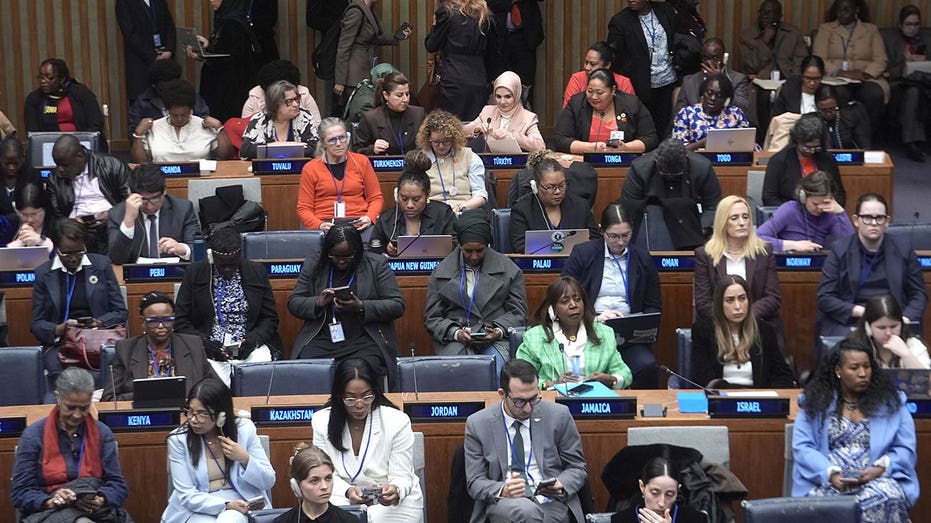
The United States stood alone at the United Nations in early March after a European-led procedural move blocked a vote on defining gender in biological terms at one of the world’s leading forums on women’s rights.At the conclusion of the U.N. Commission on the Status of Women, the U.S. was the only country to oppose the body’s annual “Agreed Conclusions,” citing concerns that the language departs from biological definitions of women and girls. No other member state voted with the United States.At the center of the dispute is how the United Nations defines “gender.” Current U.N. frameworks, rooted in the 1995 Beijing Declaration, do not provide a fixed definition and instead rely on evolving interpretations tied to broader concepts of gender identity, according to EU officials. The U.S. proposal sought to anchor the term explicitly in biological sex.UPROAR AFTER IRAN NAMED VICE-CHAIR OF UN BODY PROMOTING DEMOCRACY, WOMEN’S RIGHTSThe U.S. introduced a resolution titled “Protection of women and girls through appropriate terminology,” which sought to clarify how gender is understood across U.N. policy.The draft states that the term “gender” should be interpreted “according to its ordinary, generally accepted usage, as referring to men and women.” The proposal never reached a vote. Belgium, speaking on behalf of the European Union, introduced a “no action motion,” a procedural tool that blocks debate and prevents a proposal from being considered. The motion passed, halting the U.S. resolution before it reached the floor.That distinction carries practical implications. U.N. language shapes global standards tied to development funding, humanitarian…
Want more insights? Join Grow With Caliber - our career elevating newsletter and get our take on the future of work delivered weekly.
